
Company Liquidation Service in Dubai, UAE

Business Liquidation Services UAE
If your business is winding down operations, whether that’s a Mainland company, a Free Zone entity, or an Offshore structure, proper company liquidation in Dubai is a legal requirement, not just a formality.
Map My Books helps business owners close their company correctly, coordinating trade licence cancellation, employee settlement, creditor notices, liquidation audits and final deregistration from start to finish, so nothing gets missed and no penalty catches you out later.
What Is Company Liquidation in Dubai?
Company liquidation is the formal legal process of closing a business, settling its debts and liabilities. A complete company liquidation guide consists of distributing any remaining assets to shareholders and deregistering it with the relevant authority. Under the UAE Commercial Companies Law, this process is distinct from simply letting a trade licence lapse; liquidation requires a licensed liquidator, creditor notification, and a final audit before a company can be legally struck off.
Unsure whether your business requires liquidation or simple licence cancellation?
Why Do Businesses Choose Liquidation Services in Dubai?
When should you liquidate a company? Generally, as soon as it’s clear the business will not continue operating, since delaying liquidation only adds to compliance risk and ongoing costs. Common reasons businesses in Dubai choose to liquidate include:
Business restructuring
Consolidating or reorganising group entities into a simpler structure.
Financial difficulties
Closing a company that can no longer meet its financial obligations.
Shareholder disputes
Dissolving a company when partners can no longer agree on its direction.
Business inactivity
Formally closing a dormant company rather than leaving it exposed to renewal fees and penalties.
Completion of project
Winding up a special-purpose entity once its specific project or contract has ended.
Company relocation
Closing a Dubai entity as part of moving operations to a different jurisdiction.
Regulatory compliance
Liquidating to avoid mounting fines from an unrenewed or non-compliant licence.
Business acquisition
Closing an entity that has been absorbed into an acquiring company's structure.
How Does the Company Liquidation Process in Dubai Work?
Map My Book’s company liquidation process in Dubai works by the following steps:
01
Pre-liquidation assessment (1 to 2 weeks)
We review your company’s structure, financial position and outstanding obligations to confirm liquidation is the right path and map out the process ahead.
02
Board Resolution & Shareholder Approval (3 to 5 days)
Shareholders formally approve the decision to liquidate and pass a board resolution appointing a liquidator.
03
Appointment of Liquidator (2 to 3 days)
A licensed liquidator is officially appointed and registered with the relevant authority to oversee the closure.
04
Trade Licence Cancellation (1 to 2 weeks)
The company’s trade licence is submitted for cancellation with the issuing authority, pending completion of the liquidation steps.
05
Visa Cancellation (1 to 2 weeks)
Employee and shareholder visas linked to the company are cancelled through the relevant immigration authority.
06
Employee Settlement (1 to 3 weeks)
Final salaries, gratuity and other end-of-service entitlements are calculated and paid out to staff.
07
Creditor Notice Period (45 Days)
A public liquidation notice is published, giving creditors 45 days to submit any outstanding claims against the company.
08
Utility & Bank Closure (1 to 2 weeks)
Utility accounts, telecom services and company bank accounts are formally closed, with no-liability certificates obtained where required.
09
Liquidation Audit & Final Accounts (2 to 4 weeks)
A licensed auditor prepares the liquidation audit report and final accounts, confirming all assets and liabilities have been properly settled.
10
Final Deregistration (1 to 2 weeks)
Once all clearances are in place, the company is officially deregistered and struck off with the relevant authority.
How Long Does Company Liquidation Take in the UAE?
Mainland
2 to 4 months
Free Zone
6 weeks to 3 months
Offshore
2 to 6 weeks
Timelines depend heavily on the 45-day creditor notice period, how quickly employee and financial matters are resolved, and how responsive the relevant authority is.
What Legal Requirements Must Businesses Meet Before Company Liquidation?
Businesses need to meet several legal obligations before a liquidation can be finalised, including:
- Federal Decree-Law No. 32 of 2021, governing commercial companies and the formal liquidation process
- Federal Decree-Law No. 51 of 2023, relevant to corporate tax obligations at closure
- Economic Substance Regulations, where applicable to the company's activities
- AML Compliance, confirming anti-money laundering obligations have been met
- VAT Deregistration with the Federal Tax Authority
- Corporate Tax deregistration and final filings
- MOHRE clearance confirming all employee matters are resolved
- Municipality Clearance confirming no outstanding local dues
- Landlord NOC confirming lease obligations are settled
- Authority approvals from the specific Mainland or Free Zone authority overseeing the company
Ensure every legal requirement is completed before closing your business.
What Is a Liquidation Audit in the UAE?
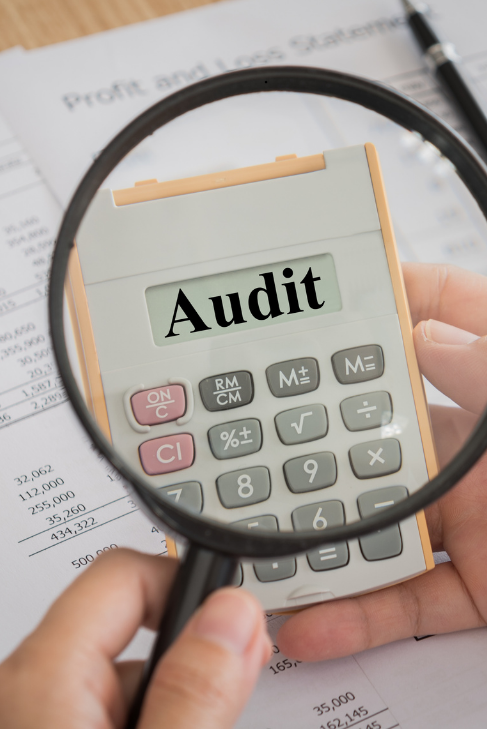
A liquidation audit is an independent review of a company’s final financial position, confirming that all assets have been accounted for and all liabilities properly settled before the company can be deregistered. It’s required because authorities need assurance that no creditor, shareholder or employee has been treated unfairly during the closure. The audit is performed by a licensed audit firm registered with the relevant authority.
Requirements differ slightly by company type:
- Mainland companies generally require a public notice in local newspapers alongside the audit.
- Free Zone companies follow the specific liquidation audit format set by their Free Zone authority.
- Offshore companies typically follow a simplified audit process given their more limited operational footprint.
The audit process results in three key documents: a Liquidation Report detailing the company’s financial position, an Audit Certificate confirming the review is complete, and the Final Accounts submitted to the authority as part of deregistration.
Need a liquidation audit? Our accounting specialists in the UAE can help.
What Documents Are Required For Liquidating Business?
Required Before Starting Liquidation
- Financial Documents: Trial balance, bank statements, and up-to-date accounting records.
- Corporate Documents: Trade licence, memorandum of association, and shareholder resolutions.
- Employee Documents: Employment contracts, visa records, and labour card details.
- Operational Documents: Lease agreements, supplier contracts, and asset registers.
Required During the Liquidation Process
- Closure resolutions signed by shareholders
- Authority communications confirming each stage of closure
- Employee settlement records and final payment confirmations
- Creditor notifications and any claims received
- Financial statements covering the period up to liquidation
Required for Final Company Deregistration
- Audit report from the appointed liquidator
- Shareholder approvals confirming the liquidation is complete
- Tax clearance from the Federal Tax Authority
- Municipality clearance confirming no outstanding dues
- MOHRE clearance confirming employee matters are settled
- Final deregistration certificate issued by the authority
Avoid delays by ensuring every clearance certificate is completed correctly.
Who Can Act as a Liquidator Company in Dubai?
What is a liquidator? A liquidator is a licensed individual or firm appointed to oversee a company’s closure, from settling debts to final deregistration.
- Responsibilities: A liquidator verifies assets and liabilities, settles creditor claims, manages employee entitlements, and prepares the final liquidation report.
- Licensed liquidator requirements: Liquidators must be registered and approved by the relevant Dubai or Free Zone authority to legally act in this role.
- Appointment process: Shareholders formally appoint a liquidator through a board resolution, which is then submitted to the authority for approval.
- Board of liquidators: For larger or more complex companies, a board of liquidators may be appointed instead of a single liquidator, sharing responsibility across the process.
- When an external liquidator is required: Most authorities require an external, independent liquidator, particularly for Mainland and Free Zone companies with creditors or employees involved.
| Factor | Internal Liquidator | External Liquidator |
|---|---|---|
| Independence | Limited, tied to the company | Fully independent, third party |
| Authority acceptance | Often not accepted for formal closure | Required by most Dubai authorities |
| Best suited for | Very simple, dormant entities | Mainland, Free Zone and Offshore companies with creditors, staff or assets |
| Compliance risk | Higher, due to lack of independence | Lower, since the process is externally verified |
We Offer Company Liquidation Services in Mainland, Free Zone and Offshore Companies
| Factor | Mainland | Free Zone | Offshore |
|---|---|---|---|
| Timeline | 2 to 4 months | 6 weeks to 3 months | 2 to 6 weeks |
Documents | Board resolution, newspaper notice, audit report, clearances | Authority-specific liquidation form, audit report, lease closure | Simplified resolution and audit, minimal local documentation |
Costs | Higher, due to creditor notice and audit complexity | Moderate, depending on Free Zone authority fees | Lowest, given limited operational footprint |
Authority | DED / DET | Relevant Free Zone Authority | RAK ICC / Ajman Offshore |
| Complexity | Highest | Moderate | Lowest |
Why Choose Map My Books for Company Liquidation Services in Dubai?
- UAE accounting experts, with over 6 years of hands-on experience across Dubai and the wider UAE
- Licensed liquidation support, coordinated with authorised liquidators
- Tax deregistration, covering VAT and Corporate Tax closure
- Audit coordination, managing the liquidation audit from start to finish
- Mainland liquidation experience
- Free Zone liquidation experience across multiple zones
- Offshore liquidation experience
- End-to-end documentation, so nothing gets missed along the way
- Transparent costing, with no hidden fees added mid-process
- Faster approvals, through established relationships with local authorities
How Much Does Company Liquidation in Dubai Cost?
Company liquidation costs in UAE vary significantly depending on company size, structure and complexity:
| Structure | Typical Starting Cost (2026) |
|---|---|
| Simple Free Zone or Offshore companies | Typically starts from AED 50,000 to 60,000 |
| Mid-sized Mainland companies with employees and creditors | Typically starts from AED 300,000 to 350,000 |
| Large or complex companies with significant assets | AED 2 million or more |
Pricing is affected by factors including company type, number of employees, outstanding creditors, asset complexity, and how quickly the closure needs to be completed.

What Related Business Services Can Help Before or After Business Liquidation?
Company Formation
Setting up a new entity if you're restructuring rather than fully exiting the market.
Accounting & Bookkeeping Services
Keeping your records accurate and audit-ready throughout the liquidation process.
VAT Services
Managing VAT deregistration alongside your company closure.
Corporate Tax Services
Ensuring final tax filings and deregistration are handled correctly.
Business Valuation
Understanding the value of assets being distributed as part of liquidation.
Bank Account
Assist businesses and individuals with bank account opening, documentation, and banking procedures in Dubai, UAE.
Which Industries Do We Help With Deregistration in Dubai, UAE?
We help the following industries with deregistration in Dubai, UAE:
Trading & Commodities
Closing import/export and general trading licences cleanly.
Oil & Gas
Managing the additional regulatory clearances this sector typically requires.
Real Estate
Handling lease and property-related obligations during closure.
Construction
Settling supplier and subcontractor obligations as part of liquidation.
Food & Consumer Goods
Managing municipality and health authority clearances.
Gold & Precious Metals
Navigating the sector's specific compliance requirements at closure.
Technology & Media
Closing Free Zone media and tech licences efficiently.
Warehousing & Logistics
Resolving asset and lease matters tied to storage facilities.
Education
Managing the additional approvals education providers require to close.
Manufacturing & Refineries
Handling equipment, asset and environmental clearances.
E-commerce
Closing digital trading licences and associated tax registrations.
Areas We Serve UAE
Map My Books supports company liquidation across both Mainland and Free Zone jurisdictions throughout the UAE, from Dubai’s own Free Zones, industrial areas and commercial districts through to the major Free Zones and business hubs of Sharjah, Abu Dhabi, Ajman, Ras Al Khaimah, Fujairah and Umm Al Quwain.
UAE Free Zones:
- Sharjah Airport International Free Zone (SAIF Zone)
- Hamriyah Free Zone
- Sharjah Media City (Shams)
- Dubai Multi Commodities Centre (DMCC)
- Jebel Ali Free Zone (JAFZA)
- Dubai Airport Free Zone (DAFZA)
- Abu Dhabi Global Market (ADGM)
- KEZAD (Khalifa Economic Zones Abu Dhabi)
- Ras Al Khaimah Economic Zone (RAKEZ)
- Fujairah Free Zone
UAE Mainland Areas:
- Dubai (Business Bay, DIFC, Deira, Al Quoz)
- Abu Dhabi (Al Maryah Island, Mussafah, Khalifa City)
- Sharjah (Al Nahda, Al Khan, Al Qasimia, Industrial Areas)
- Ajman
- Ras Al Khaimah
- Fujairah
- Umm Al Quwain
- Various UAE Industrial & Commercial Zones
What our clients say about us
Posted on GoogleTrustindex verifies that the original source of the review is Google. Map My Books is a very professional and trustworthy firm. They look after all our bullion and jewellery business, with amazing professionalism. Kudos to the team. Keep up the good work. Would recommend them anyday. Their ability to make sense from numbers is amazing.Posted on GoogleTrustindex verifies that the original source of the review is Google. ⭐⭐⭐⭐⭐ Map My Books has been an absolute lifesaver! As an entrepreneur, accounting and numbers can quickly become overwhelming, but their team brings so much clarity and peace of mind. Their excellent accounting, prompt advisory, and seamless execution truly stand out. Whenever we’ve found ourselves lost in the chaos, they’ve stepped in, understood the bigger picture, and gone deeper to rescue the situation and exactly when we needed it. It’s incredibly reassuring to have a team that doesn’t just manage your books but takes ownership and genuinely understands an entrepreneur’s challenges. Highly recommended! They’ve made one of the most stressful parts of running a business feel completely manageable.Posted on GoogleTrustindex verifies that the original source of the review is Google. Fast and realiable services by the team. Very trustworthy. Thanks Puskar and the team.👍Posted on GoogleTrustindex verifies that the original source of the review is Google. Exceptional and reliable team.Posted on GoogleTrustindex verifies that the original source of the review is Google. Puskar has a deep knowledege of providing financial insigts. Also, very timely delivery of the task without follow up and catch ups. Recommended. Keep it up guysPosted on GoogleTrustindex verifies that the original source of the review is Google. Fast and reliable. Thank you
Frequently Asked Questions
What about telecom and utility accounts?
These must be formally closed and cleared, with no-liability certificates obtained before final deregistration can proceed.
Is a liquidation audit mandatory?
Yes, a liquidation audit is required by Mainland and Free Zone authorities before a company can be deregistered.
Are there any fees or penalties?
Yes, authority fees apply throughout the process, and penalties can accrue if licences or visas are left unresolved before liquidation.
Can a company be liquidated without debts?
Yes, debt-free companies still need to go through formal liquidation, though the process is generally faster and simpler.
Can I liquidate a Free Zone company?
Yes, each Free Zone has its own liquidation procedure, and we coordinate directly with the relevant authority on your behalf.
What happens to employees during liquidation?
Employees are formally settled, including final salary and gratuity payments, with visas cancelled as part of the process.
What happens to VAT registration?
VAT registration must be deregistered with the Federal Tax Authority as part of the closure process.
What happens to corporate tax registration?
Corporate Tax registration also needs to be formally deregistered, alongside final tax filings.
What is the difference between company closure and liquidation?
Closure can refer to simply not renewing a licence, while liquidation is the full legal process of settling debts and formally deregistering the company.
Can a dormant company be liquidated?
Yes, dormant companies still need to go through formal liquidation to avoid ongoing renewal fees and penalties.
Is shareholder approval mandatory?
Yes, shareholders must formally approve the decision to liquidate through a board resolution before the process can begin.
What is a liquidation report?
A liquidation report is the formal document prepared by the auditor, confirming the company’s final financial position and settlement of liabilities.
Ready to Close Your Company the Right Way?
Closing a business the wrong way can leave you exposed to fines, visa complications and unresolved liabilities long after you’ve stopped trading. Let Map My Books manage the process properly, from your first consultation through to final deregistration.